


Problem
Solution
When "unsatisfactory" means something serious
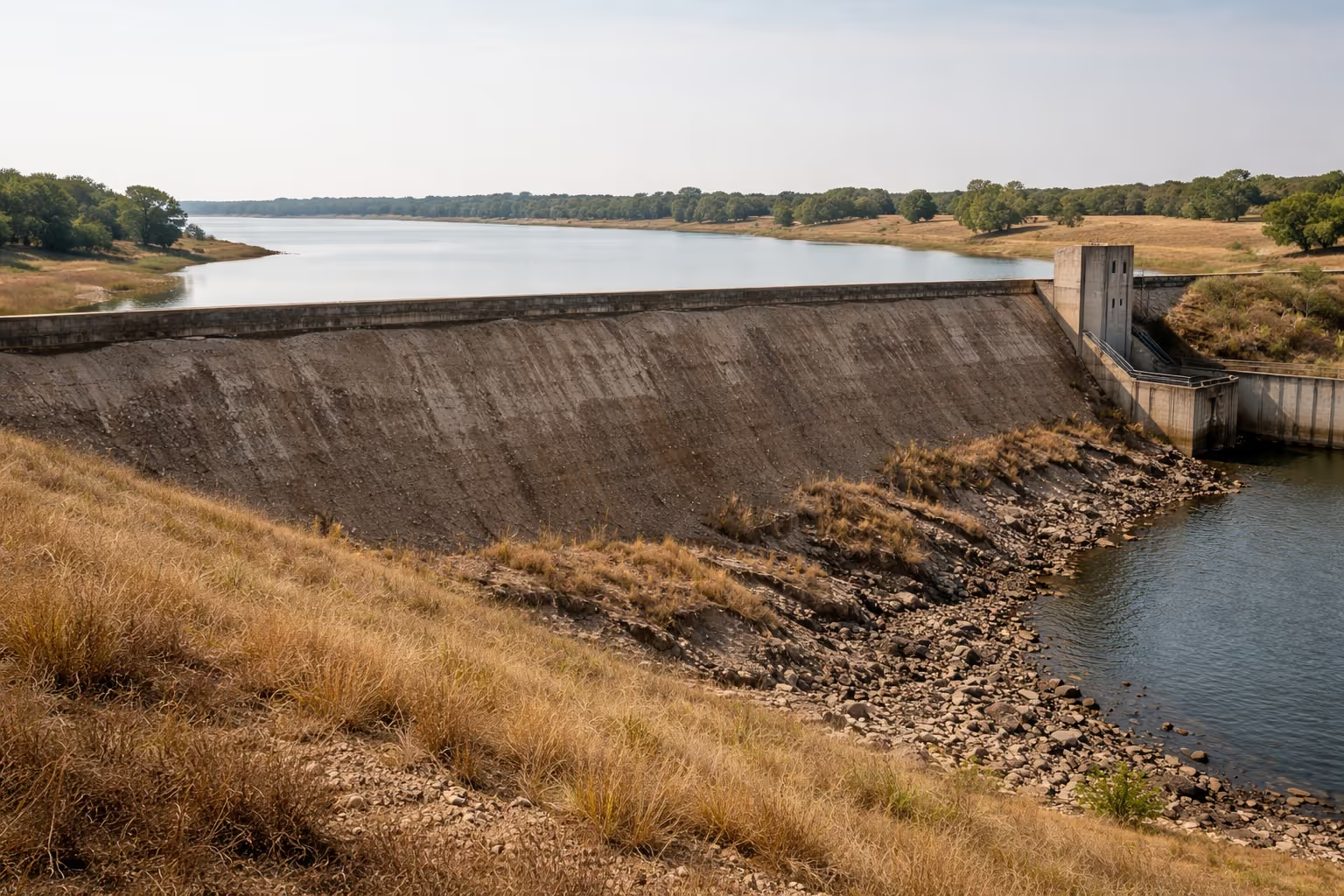
Dam safety ratings exist on a spectrum, and most dams in active use never approach the bottom of it. Stigler Lake Dam had. An "unsatisfactory" rating from state regulators is not a bureaucratic flag. It is a formal finding that the structure cannot be relied upon to perform safely under the conditions it was built to handle. Paired with a high hazard classification, it meant that a failure event would have consequences extending well beyond the reservoir itself: downstream communities, public infrastructure, and a city's entire drinking water supply all in the path of a structure that engineers had documented as actively deteriorating.
Uncontrolled seepage. Significant slope deterioration on the downstream face. A risk profile that did not require a worst-case storm to trigger, just normal operations. This was not a long-term planning problem. It was an urgent one.
Why WaterSMART was the right vehicle
The Bureau of Reclamation's WaterSMART Drought Response Program funds projects that improve water supply reliability and drought resilience in the face of increasing climate variability. At first glance, a dam rehabilitation might read as a safety project rather than a drought project. But B&A structured the application to make the connection explicit and compelling.
A dam that fails does not just create a flood risk. It eliminates a water supply. For a community with no alternative source, that is a drought condition by another name: sudden, total, and with no recovery timeline. The WaterSMART program's mandate includes protecting existing water supplies against disruption, and Stigler's situation fit squarely within that mission. Federal reviewers agreed.
What the rehabilitation actually entails
The funded scope addresses the dam's deficiencies comprehensively rather than incrementally, with each element targeting a specific failure mode identified in engineering inspections:
- Dam crest raising
- Increases freeboard and reduces the risk of overtopping during significant storm events, addressing hydraulic deficiencies in the original design.
- Downstream slope flattening
- Directly addresses the documented slope deterioration, restoring structural integrity and reducing the risk of slope failure under saturation.
- Toe drain installation
- Manages seepage at the base of the dam, relieving internal water pressure that contributes to slope instability and piping risk.
- Spillway replacement
- Replaces aging and undersized spillway infrastructure with a system capable of safely passing design flood flows.
- Seepage barrier and cutoff system
- A subsurface intervention that intercepts and controls internal seepage pathways through the dam, the most direct response to the uncontrolled seepage documented by inspectors and a foundational element of the long-term structural fix.
What this means for Stigler and its residents
The stakes of this project are as concrete as they get. Stigler is a city in Oklahoma with one lake, one dam, and one municipal water system. When state engineers rated that dam unsatisfactory and flagged it for high hazard potential, the City was living with a threat it had limited means to address on its own. The $8,516,328 WaterSMART award changes that equation entirely.
When the rehabilitation is complete, Stigler will have a dam that meets modern safety standards, a water supply protected against structural failure, and a new interconnection pipeline that adds flexibility and redundancy the system has never had. For a community that has been managing existential water supply risk, that is not just an infrastructure upgrade. It is a foundation the City can build its future on.